

Renee Louis publishes “Profit or Protection? Evictions and Housing Dynamics in Immigrant Neighborhoods” in City and Community
In an article published in City & Community in 2026, CCRL PhD student Renee Louis and colleagues conduct a mixed methods study to investigate residential stability in poor immigrant neighborhoods.

Ángel Mendiola Ross publishes “Research Note: Urban Expansion and the New Carceral Geography” in City and Community
In a research note in City & Community, Angel Mendiola Ross examines how U.S. prisons have been sited across metropolitan and rural areas since the 1990s prison boom, and argues that prisons are metropolitan institutions shaped by suburbanization rather than only a rural phenomenon.

Eve Dill accepted into Stanford’s Human-Centered Artificial Intelligence (HAI) Data Science Scholars Program
Sarah-Eve Dill, a Sociology PhD student and NSF Graduate Research Fellow, was named one of 15 new Stanford HAI Data Science Scholars, a two-year fellowship for PhD students whose work advances data science and AI.
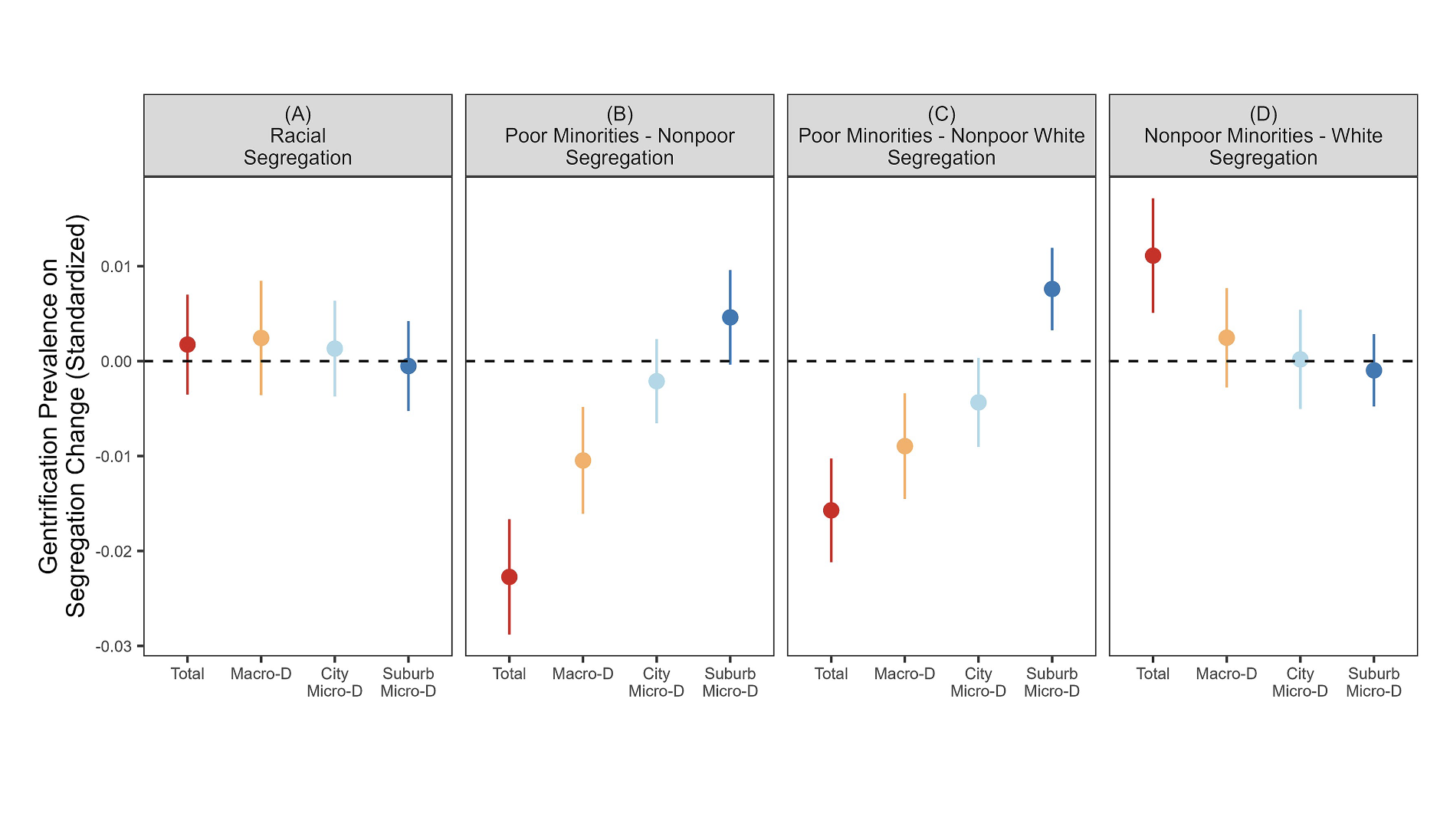
Prof. Jackelyn Hwang and co-authors publish “Integrating or segregating? Gentrification, the changing city-suburb divide, and black exceptionalism” in Social Forces
In Social Forces, Jackelyn Hwang and co-authors Elizabeth Roberto, Francine I. Stephens, and Jacob S. Rugh examine how the spread of gentrification across US metropolitan areas has reshaped racial and economic segregation since 1990.

Prof. Jackelyn Hwang recognized as a top contributor in the Computational Social Science Rankings
Prof. Jackelyn Hwang, along with Robb Willer, was named a leading individual contributor in the Computational Social Science Rankings, a decade-long, metrics-based assessment of publication output.

Prof. Jackelyn Hwang featured on The Future of Everything Podcast
Prof. Jackelyn Hwang joins Russ Altman on Stanford Engineering’s The Future of Everything podcast to discuss how she uses AI and Google Street View to study gentrification, displacement, and neighborhood well-being, and how her research is informing anti-displacement and homelessness prevention policy in the Bay Area.

Angela He receives the ASA Consumers and Consumption Section best student paper award
Angela He received the American Sociological Association’s Consumers and Consumption Section Student Paper Award for “The Moral Principles of Buyer Legitimacy: Perceptions of Who Should Be Allowed to Buy in the American Housing Market,”

Racial Equity in Neighborhoods (REN) Collaborative Launches
The Racial Equity in Neighborhoods (REN) Collaborative, led by Jackelyn Hwang’s Changing Cities Research Lab with support from Stanford’s Institute for Advancing Just Societies, brings researchers, local officials, and community leaders together to design and test housing and neighborhood equity solutions in Bay Area cities.
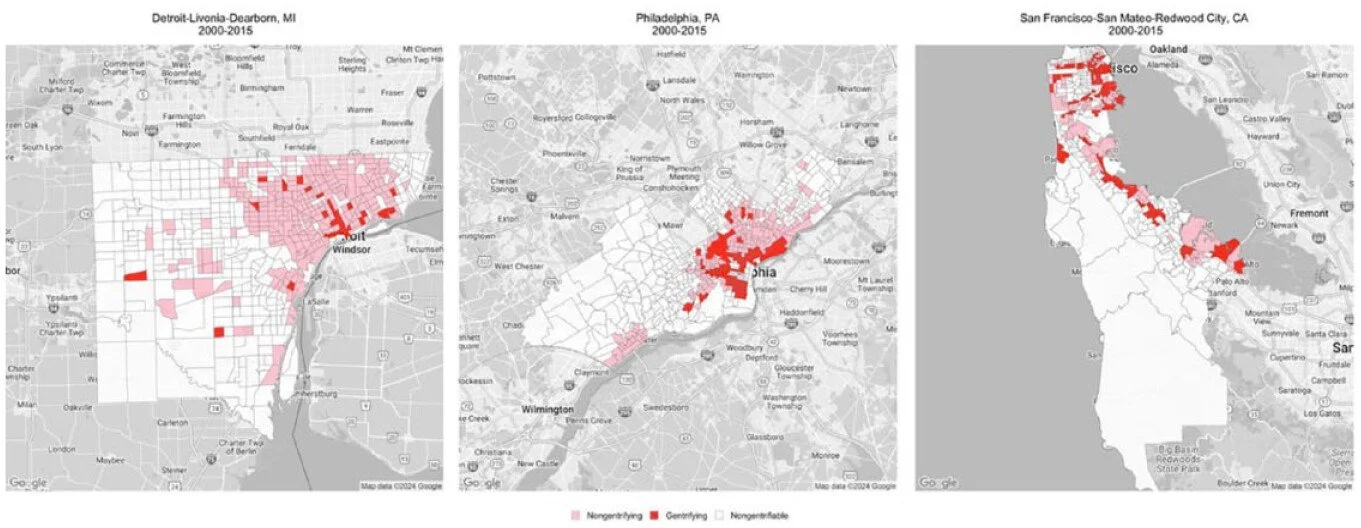
Prof. Jackelyn Hwang and Iris Zhang publish “The Reign of Racialized Residential Sorting: Gentrification and Residential Mobility in the Twenty-First Century” in City and Community
Jackelyn Hwang and Iris Zhang use national panel data from 2000 to 2017 to show that gentrification isn’t linked to higher moving rates for lower-income residents, but that Black and White movers end up in starkly different neighborhoods at every income level.
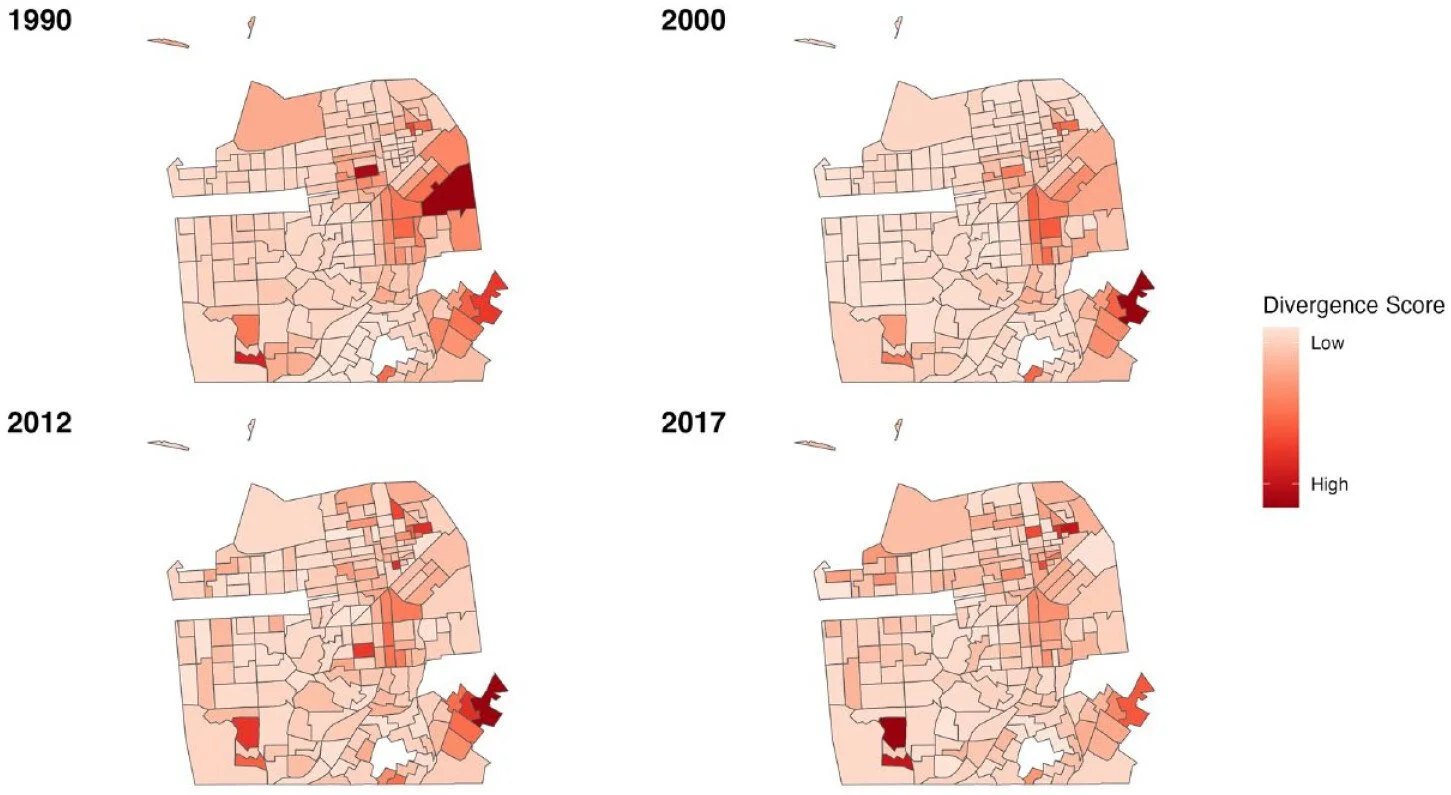
Prof. Jackelyn Hwang and Prof. Nima Dahir receive an Honorable Mention for the American Sociological Association Community and Urban Sociology Section's Jane Addams Award for Best Article
Jackelyn Hwang and Nima Dahir were recognized for their article, “Who Owns the Neighborhood? Ethnoracial Composition of Property Ownership and Neighborhood Trajectories in San Francisco,” published in City & Community.

Racialized Reshuffling: Urban Change and the Persistence of Segregation in the Twenty-First Century
by Jackelyn Hwang and Tyler McDaniel
Annual Review of Sociology, 2022